I. What is Pre-Implantation Genetic Testing (PGT)?
After fertilization, zygotes will be allowed to grow in a culture media for several days. Prior to the transfer process, cells can be extracted from the embryos and genetic testing can be performed on those cells. In nearly all situations, embryos are frozen either for genetic testing or afterwards until results are available.
The general term for these assays is PGT however within PGT there are multiple specific tests, specifically pre-implantation genetic testing-monogenic (PGT-M, formerly PGD), pre-implantation genetic testing-aneuploidy (PGT-A, formerly PGS), pre-implantation genetic testing-structural rearrangements (PGT-SR).
PGT-M looks for specific genetic conditions (such as sickle cell anemia), PGT-A looks for abnormal number of chromosomes (such as Trisomy 21, Down’s syndrome), and PGT-SR looks for translocations or inversions.
II. Some Concerns
A. Results should not alter plans to transfer every child
There is a Christian duty for a couple to transfer every created child. No child should be murdered or discarded. The implicit purpose of PGT is that only children who are not genetically “normal” would be transferred and the rest discarded. This is not an option for the Christian. Thus, PGT offers no significant benefit in a couple’s plan to transfer every child. While one can argue for the benefit of early diagnosis of genetic condition so a couple can begin preparing, genetic testing is available during pregnancy through the more accepted methods of chorionic villus sampling (CVS) and amniocentesis.
B. Testing invites temptations
As it ought to be the intention of a Christian couple to transfer every child they create, the results of PGT can often times bring about difficult decisions and the temptation to dehumanize embryos or justify not transferring children with genetic anomalies. At times, couples though pursuing the transfer of every child may inwardly desire the death of those children who have specific genetic conditions.
C. Risk of harming the child
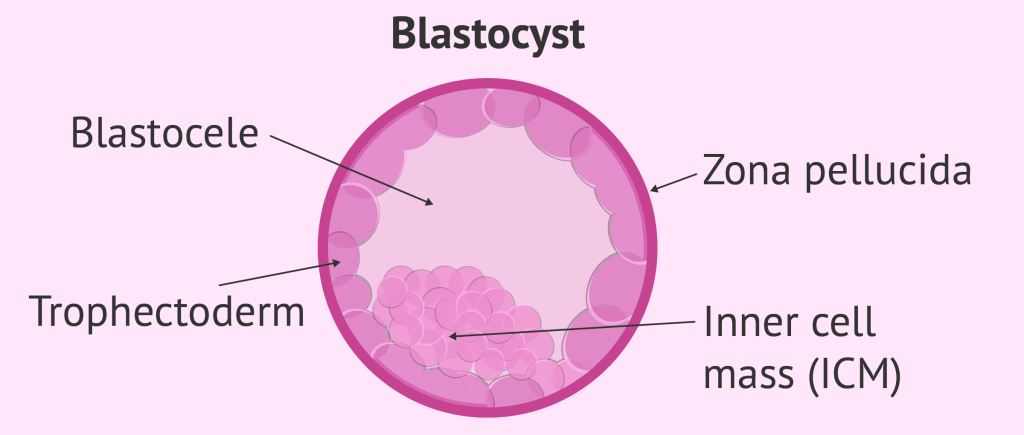
During the early days of an embryo, there are several distinct structures – the inner cell mass (ICM) which is the child and the trophectoderm (TE) which develops into the placenta. The TE surrounds the ICM as the embryo develops. In order to extract cells for genetic testing a hole in the zona pellucida which acts as a shell over the TE has to be made at which point, cells from the TE can be aspirated. While no ICM cells are taken, the process of extracting TE cells can change the structural configuration of the embryo and compromise the integrity of the embryo. It is not clear how significant the risk of PGT is for the embryo, some cite 1% risk of the embryo not surviving the PGT process though no exact study was referenced in that citation. There are also considerations that PGT could negatively impact the embryo’s chances of surviving the freeze/thaw process.
D. Risk of false testing results
As medical testing is not 100%, there is always a caution that the results from PGT are not accurate. As with assessing the risk of harm to the child, ascertaining the accuracy of PGT is not so easy. Certain resources cite a 2-3% of false results however few studies are available for referencing.
III. Conclusion
There are certainly reasonable arguments for the use of pre-implantation genetic testing, however, at this time, genetic testing appears to provide no significant benefit for most families given available alternatives of testing during pregnancy while posing a potential harm to the child and creating an opportunity for sinful thoughts and actions to arise. While the normative practice of IVF is to genetically test all children, this may yet be another instance in which as Christians we diverge from cultural thinking and practice.
Resources
https://www.youtube.com/watch?v=w4_3ifBa69g
 Foreknown and Created